ORIGINAL FICTION · PSYCHOLOGICAL SUSPENSE
The spare key envelope
An unexplained key inside Elise's locked apartment turns an old favor into a frightening question of access.
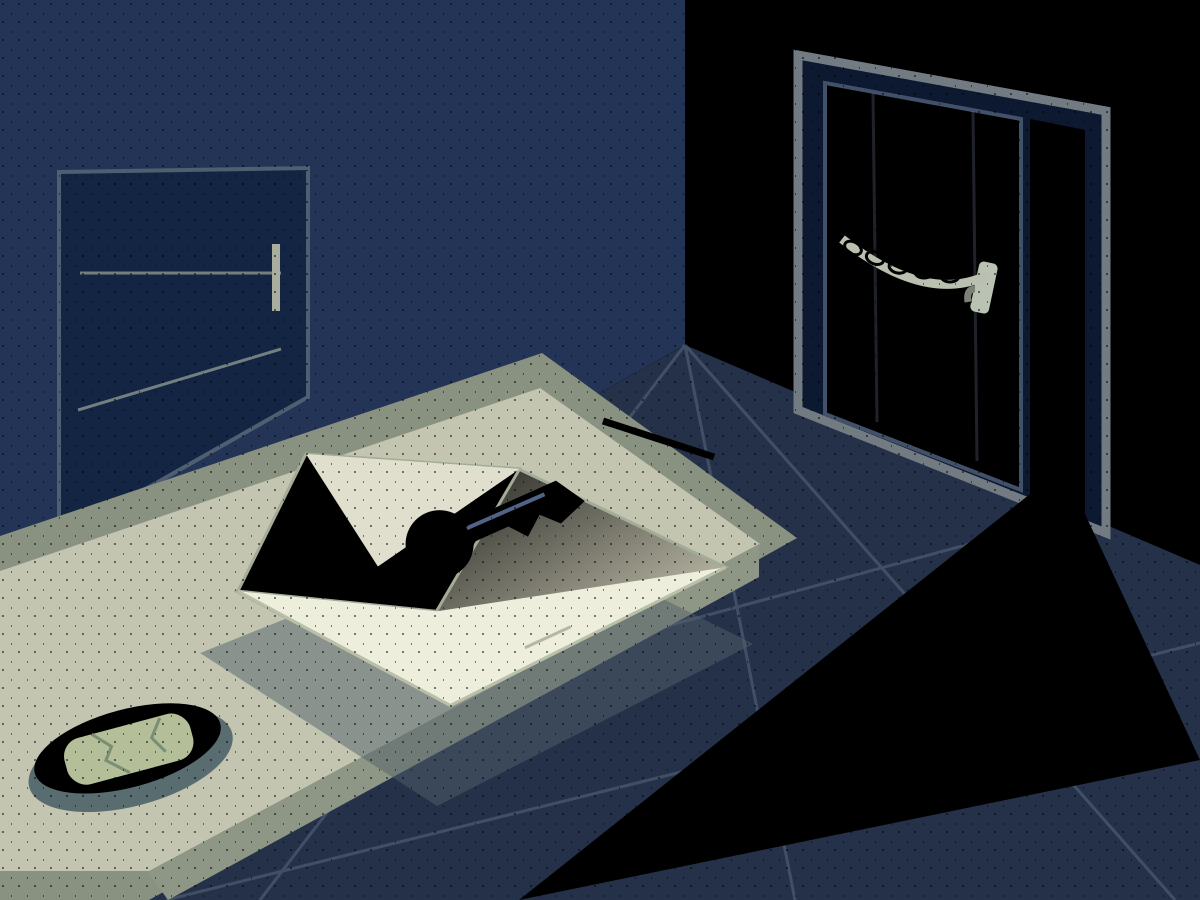
The envelope stuck to my thumb when I picked it up. Someone had pressed the flap down before the glue dried, and a little of it had squeezed along the edge. On the front, in block letters, were two words: SPARE KEY.
I was standing inside my apartment. The front door was shut, its lock engaged. I had opened it with the key on my ring less than a minute earlier.
Inside the envelope was a key with a navy plastic head. It was mine. I kept it, or thought I kept it, in the shallow drawer beside the stove.
The refrigerator hummed behind me. When its motor stopped, I heard a tap of water from the kitchen sink.
I set the envelope on the table and checked the drawer. Batteries, takeout menus, a roll of tape with a dirty edge. There was a clean patch in the dust where a key might have lain. I pulled the drawer all the way out and looked behind it.
On the bathroom sink, the soap dish sat at an angle. It usually fit squarely against the wall. The bar of soap was dry and cracked down its middle. Beside the front door, a gray smudge marked the metal plate of the chain.
I touched neither. I stood in the hall, listening for movement in the rooms I had just passed.
Mr. Vale answered on the fourth ring. He was the building superintendent and lived two floors down.
“Did you come into my apartment today?”
“No.”
“Did you leave me an envelope?”
“What envelope?”
I read him the words on the front. He let me finish.
“I didn’t leave it,” he said. “I haven’t been in four C today.”
“Could somebody have used your key?”
“The office keys stay with staff. I’ll check the access log in the morning.”
“There’s a mark on my door chain.”
“Is your door locked now?”
“Yes.”
“Keep it that way. If somebody’s there, call for help. I can come up and check the rooms with you.”
I had already opened both closets. I let him come anyway.
He moved through the apartment with his heavy shoes still on, looking under the bed and behind the shower curtain. He said nothing about the soap dish. At the front door, he bent to examine the chain.
“That could have been there a while.”
“It wasn’t there yesterday.”
“All right.”
His agreement sounded patient. I wanted him to be alarmed. When he left, I pushed a chair against the door. It could not have kept anyone out. Its legs scraped the floor loudly enough that I would hear it move.
I called Nora. Her phone rang until it went to voicemail. I sent a photograph of the envelope and wrote, Was this you?
The message showed delivered. I watched the screen for a reply, then turned it face down.
Nora had lived here for four years. She had been gone for seven weeks. Her name was no longer on the lease, but the bathroom shelf still bore a pale rectangle where she used to keep her bottles. I had meant to move mine into the space. So far I had only taken away the empty shelf liner.
The last time she had agreed to help with a repair, I had given her the navy key. That was in August, after she moved out. I had been unable to leave work to meet a maintenance worker, and Nora knew which kitchen cabinet stuck if you pulled it from the wrong side. She said she would let him in. I had also signed a form at the office allowing her to arrange repair access if I could not be reached.
Afterward, she told me she would put the key back. I believed she had. Looking into the drawer that evening, I could not remember seeing it there.
I had not mentioned any of this to Mr. Vale.
I took the chair away from the door, put it beside the table, and sat in it. Every few minutes I looked at the envelope. Whoever had brought it in had been close enough to read the notes I had left by the kettle and to see the laundry drying over a chair. The thought made me angry. Then I remembered Nora holding the navy key in her palm while I explained, a second time, which door it opened.
At nine the next morning, Mr. Vale called.
“No staff entry yesterday,” he said. “There’s a plumbing visit scheduled for your unit at ten thirty today. I thought you knew.”
I stood up so fast my chair struck the wall. “Scheduled by whom?”
“Nora Bell. The downstairs tenant reported water on her ceiling Sunday. We called you first. Then we called your authorized contact.”
My phone had been silent through most of Sunday. I found the missed call while he waited. There was a voicemail too, short and plain, saying that someone needed to inspect the kitchen sink.
“I’m leaving work,” I said. “Don’t let anyone in until I get there.”
“The plumber’s on his way. I’ll tell him to wait.”
I missed the bus by the width of its closing doors and spent twelve minutes on the curb, calling Nora again. This time she rejected the call. A moment later a message appeared.
I’m working. The plumber is for the leak. Vale has the details.
I typed, You were inside my apartment. I deleted it. I typed, Why didn’t you tell me? and sent that instead.
At the building, the plumber was waiting with a canvas bag and a paper cup of coffee. Mr. Vale showed me the work order. Nora’s name was printed in the space for the person who had confirmed access. The confirmation was timed Sunday afternoon.
“You signed this authorization,” Mr. Vale said, pointing to a second sheet. “It’s still on file.”
“I know I signed it.”
“I can take her off.”
“I want to see the sink first.”
The plumber opened the cabinet and showed me a dark, swollen patch at the back. He had not yet touched anything. Water gathered at one joint, clung there, and fell into the cabinet with a soft tick. On the floor below us, someone had been living under that sound.
I moved the cleaners out of the cabinet while he went for his tools. The blue bowl I used for fruit stood on the shelf above the sink. I put it on the counter where he could reach it.
Nora had once asked me to send a picture of that bowl before buying it at a yard sale. She said the blue looked different under the seller’s yellow porch light. I had sent her four pictures, each taken from a slightly different angle. She bought it anyway.
Mr. Vale remained by the door. “I didn’t leave your envelope,” he said.
“I believe you.”
He looked at the chain, then at me. “I can change the lock cylinder this afternoon. The old key won’t work after that. I’ll remove Nora from the contact list and cancel her building fob. I need your request in writing.”
“I’ll bring it down.”
I looked at the navy key in my hand. Nora had known there was a repair visit coming. She had brought the key back the day before, when I was at work. The plumber had not entered yet. I put the key back on the table and called Nora again.
The plumber finished before noon. I watched him carry his bag out, then checked the cabinet for water. It was dry. The blue bowl was upside down in the dish rack, and the cleaners were lined up on the floor where I had put them. He had moved no other part of the apartment that I could see.
At the office I wrote the request myself. Remove Nora Bell as contact. Cancel her fob. Change the lock. Notify me before any future visit. Mr. Vale read it, made a copy, and gave me the original with his signature and the time marked at the bottom.
Nora called while I was waiting for him to finish.
“I have ten minutes,” she said. I could hear carts rattling and a woman calling an order number behind her. “I’m at the laundry on Mercer.”
I walked there instead of taking the bus. Nora was outside, sitting on the low wall with a bag of clean clothes against her knee. She had cut her hair since I last saw her. It stopped above the collar of her jacket, which made her look cold.
“I got the key,” I said.
“I thought you would.”
“You went in.”
“Yes.”
She waited. Nora had always been able to wait longer than I could.
“Why an envelope?”
“I didn’t want to leave a loose key on your table. I found an envelope in the drawer.”
“You opened the drawer.”
“It was where you kept them.”
“You touched the chain.”
She glanced up. “I put it on while I was inside. I took it off to leave.”
I pictured her standing behind my locked door, the chain stretched across it, with an empty envelope in one hand. I had studied that smudge as if it might tell me whether I was safe.
“You washed your hands too,” I said.
“The soap dish was in the way. I moved it.”
I looked down at her hands. She had moved the soap dish I was picturing; she had stood at my sink while I was at work.
“Why didn’t you knock when I was home?”
“Because I came when you weren’t.”
“That’s what I mean.”
“I know.”
A dryer sounded behind the glass. Nora pulled her bag closer with her foot.
“You told me you’d put the key back in August,” I said.
“I said I would. I didn’t.”
“I asked you twice.”
“You asked me twice that morning. Then you asked what time the worker came, what time he left, whether I stayed for the whole visit, and why I hadn’t answered while he was there.”
“He had my door open.”
“He did. And I was doing you a favor.”
I remembered the messages. I had sent one while Nora was still in the apartment: Please confirm you’re alone. When she did, I asked for a photograph of the kitchen. She sent it. I enlarged it to see whether the bedroom door was closed. Later I asked why she had taken twenty minutes to get home from a trip that usually took ten.
“I should have told you I kept the key,” she said. “I should not have come in yesterday. I wanted to put it back without another conversation, and that was my choice. It was a bad one.”
“The office called me Sunday. I missed it.”
“They called me after. I said they could book the plumber.”
“You could have texted.”
“I started one.” She rubbed her thumb over a seam in the laundry bag. “I could hear the questions coming before I’d finished writing it.”
I wanted to defend the question about my key. Then I remembered enlarging her photograph to inspect my bedroom door.
“I made you account for a favor as if you were stealing from me,” I said. “I was wrong.”
Nora looked at the traffic. A delivery truck blocked the corner, and a cyclist waited for it to move.
“Thank you for saying it,” she said. “I still don’t want to do this again.”
“You won’t have to. I’ve taken your name off the contact list. They’re canceling the fob and changing the lock today.”
“Okay.”
“And you can’t enter without asking me. Even if you think leaving something will help.”
“I understand.”
The truck pulled away. Nora stood and lifted the laundry bag.
“I have some records of yours,” I said. “The ones that were in the bottom of my bookcase. I found them after you moved.”
“I wondered where they went.”
“I’ll box them. You can tell me when you want to pick them up. I’ll bring them downstairs.”
She nodded. She did not offer a day.
I walked home with the signed paper folded in my pocket. I had hoped she might ask whether I wanted her to wait while the lock was changed. I had also hoped she would go before I said something to make her stay. By the time I reached my building, my hands were cold enough that I fumbled the old key twice.
Mr. Vale came up at four with a new cylinder and a ring of keys. I watched from the hall while he changed the lock, then went inside and tried it from both sides of the door. He waited until I had done it again.
“The fob’s off,” he said. “I checked it at the reader.”
He gave me the new keys and took the old ones, including the navy spare. I asked him to show me the revised contact list. He held it out. Nora’s entry was crossed through and marked removed; mine was the only active name.
When he had gone, I put the chair back at the table. The refrigerator started its hum. I opened the cabinet below the sink and held a piece of paper against the repaired joint. It came away dry.
Nora’s records filled a small carton: six albums, two singles in paper sleeves, one empty sleeve with a price written on it in her hand. I closed the carton but left the tape loose. She might remember something else that belonged in it.
My phone lit up while I was washing the soap dish. Nora had written, Sunday afternoon for the records, if that works.
I set the dish down. A thin piece of the dry soap broke away and lay against the drain. I rinsed it from my fingers, dried my hands, and answered.
Three o’clock. I’ll meet you downstairs.
KEEP READING
Another story.
ORIGINAL FICTIONPsychological Suspense
The copy with my notes
A marked manuscript makes translator Ada suspect that her former mentor has taken confidential pages. Carbon sheets and an old joint draft explain the handwriting, but both the breach and Ada's uncredited reuse must be recorded before the commission can proceed.
ORIGINAL FICTIONPsychological Suspense
The courtyard list
Building secretary Priya finds a list behind the courtyard noticeboard and fears a challenge to her position. Her attempt to investigate harms a neighbor, while the true purpose of the appointments brings a withheld complaint back into view.