ORIGINAL FICTION · PSYCHOLOGICAL SUSPENSE
The courtyard list
A hidden schedule puts Priya's name among her neighbors' appointments, and her search for answers exposes a private dispute.
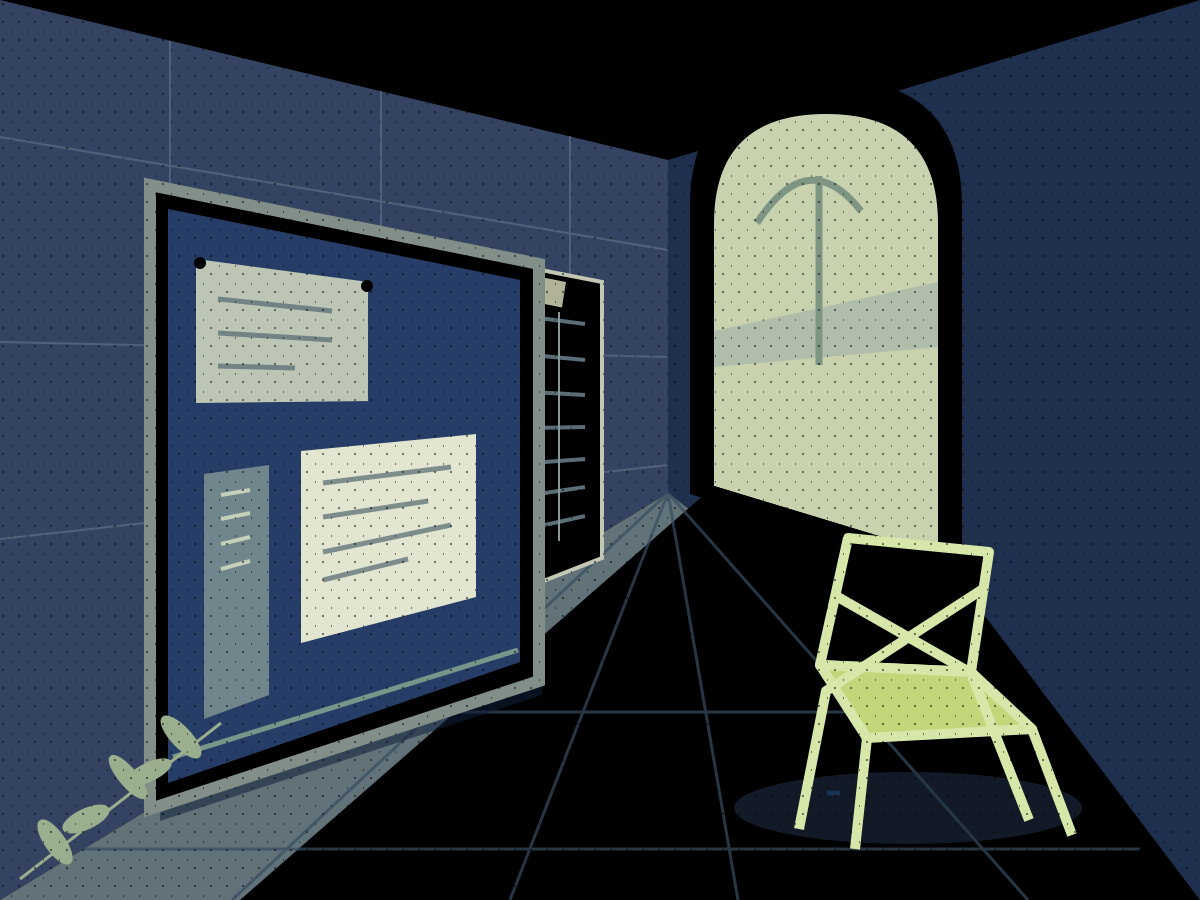
Priya caught the noticeboard before it struck the courtyard wall. Its lower screw had worked loose again, and each gust lifted the navy frame just far enough to make a sharp wooden knock. Three people had already complained about the noise. None had offered to hold the board while she tightened it.
Rain had softened the tape on the back. As she steadied the frame, a pale sheet slid against her wrist. She pulled it free, expecting an old notice.
Thursday, it said, followed by names and times.
9:00 Mrs. Gant
9:20 Priya Shah
10:00 Ines Calder
10:40 Rosa Varela
The list continued down the page. Some names had twenty minutes between them, others forty. A strip of tape covered the last character of a room number at the bottom. Priya could read only Room 3.
She checked her phone’s calendar. Thursday was tomorrow.
She looked up at the windows around Tern Court. Most were shut against the wet air, though Mr. Vale’s kitchen window stood open an inch. She folded the sheet along its old crease and unfolded it again.
The committee election was still five months away. As secretary, Priya kept the calendar. She also kept the spare noticeboard screws, the key to the common rooms, and a list of whose intercoms failed when it rained. If someone wanted to change the committee without her, they would have to find a way around all of that.
Her shoe came down on the rosemary growing out of a crack beside the wall. Its smell rose as she pushed the noticeboard back into place. She took a photograph of the sheet, then held it by one dry corner while she pressed the damp tape where it had been.
Mrs. Gant came through the courtyard gate carrying a paper bag against her coat.
“Have you seen this?” Priya asked.
Mrs. Gant glanced at the list. Her face did not change. “Put it away, please.”
“You know what it is.”
“I know those are people’s names.”
“Mine is one of them.”
Mrs. Gant shifted the bag. A dark patch spread where its bottom touched her wet sleeve. “Then ask about yours.”
“Who do I ask?”
“Len arranged the room.”
Len chaired the tenants’ committee. He had been asking Priya to leave a line free on the next agenda for “a visitor.” When she asked what visitor, he said he would send details once they were settled.
“What room?” Priya said.
Mrs. Gant looked toward Mr. Vale’s open window. “I’m not going to explain the other names to you. They haven’t agreed to that.”
She went inside. Priya followed her as far as the tiled passage. Their footsteps rang off the walls, Mrs. Gant’s brisk and Priya’s a beat behind. At the stairs, Mrs. Gant stopped.
“I mean it,” she said, more quietly. “Talk to Len about your own appointment.”
Priya let her go.
In the office beside the mailboxes, she opened the committee cabinet. The complaint from Rosa Varela lay under last month’s water bills, where Priya had put it six weeks ago. It was addressed to the committee, not to her. She had read it on the day it arrived.
Rosa objected to the notes Priya had been keeping about the rear gate. The latch had failed repeatedly, and Priya had recorded when it was left open and who she saw nearby. Rosa’s brother sometimes came late to bring groceries after his shift. Priya had named him in two committee emails. Rosa had asked her twice to stop. In the letter, she asked the committee to discuss whether the visitor notes should exist at all.
Priya had drafted an agenda item called rear gate security. She had left out Rosa’s letter. It seemed improper, she had told herself, to circulate a complaint about herself while she was still checking whether the latch could be repaired.
The repair had been done four weeks ago.
She slid the letter back under the bills. She opened her photograph and enlarged the bottom edge of the sheet. Under the tape, the room number looked like 3B.
Room 3B had once held a caretaker’s desk. Now residents booked it for meetings, though the booking calendar on Priya’s office wall showed nothing for Thursday. On the first Thursday of each month, a young man from the community rooms across the road brought over two lime green folding chairs. Priya had signed his delivery slip three times. Len always carried the chairs upstairs himself.
She had asked once what they were for. “The room booking,” he had said, already turning toward the stairs.
At four, Priya found a fresh slip in the office letter slot. Two chairs for Room 3B, delivery at eight the next morning. Len’s initials were on the request. The line for the event name was blank.
She went upstairs and tried the handle of 3B. Locked. From inside came a scrape, then Len’s voice, too low for words. Priya stepped back. Someone else spoke. The door opened before she could reach the stairs.
Len stood with a stack of folded chairs against his leg. The woman behind him was gathering papers from the desk.
“Priya,” he said. “I was coming down to see you.”
“What’s happening tomorrow?”
The woman looked at Len. He set the chairs against the wall.
“I’ve left a note for you in the office,” he said. “It’s an invitation. You can read it and call me.”
“Why is my name on a schedule behind the courtyard board?”
The woman’s hands stopped over the papers. Len stared at Priya. “Behind the board?”
“Along with half the building.”
“That shouldn’t be there,” the woman said.
Priya watched Len look at her, then at the room. Len looked back at the woman instead of answering.
“I want to see it,” he told Priya.
“So you can take it down?”
“So we can find out who’s seen it.”
Priya thought of Rosa’s letter under the water bills. “I’ll bring it to the office,” she said, and left before either of them could answer.
The note Len had promised was in an envelope on her desk. She did not open it. She sat at the office computer and checked the room calendar again. No entry. She searched the committee inbox for Thursday, for Room 3B, for her own name. The envelope was still unopened beside the keyboard.
Priya opened the residents’ message group. Twenty-six households were in it. She had set it up so people could report broken lights without waiting for a committee meeting.
Does anyone know why this schedule was hidden behind the courtyard noticeboard? she typed. If these are appointments involving residents, we need to know who authorized them.
She attached the photograph. Every name was legible. She saw that before she sent it. She sent it anyway.
Replies arrived before she had put down the phone. A question mark from Mr. Vale. A message from someone on the top floor asking whether the listed people were being interviewed about the gate. Len called. Priya let it ring.
Then Ines Calder wrote, Please remove this.
Priya held her finger over the image. She could delete her message from her own screen, but the group offered no way to take it off everyone else’s phone. While she searched the menu, Mr. Vale replied to Ines.
You could have spoken to me directly.
Ines lived beneath him. He had complained to Priya about the notes Ines left on his door concerning noise. Ines had complained that he waited outside her flat to argue about them. Priya knew enough of the dispute to understand his message.
She deleted the photograph. Len called again.
“I’ve taken it down,” she said when she answered.
“People have saved it. The woman in 3B is trying to reach everyone on it.”
“Who is she?”
“Jo Mercer. She’s here to meet residents who asked for help resolving disputes. They’re private meetings.”
Priya looked at the blank event line on the chair slip. “Then why was the list outside?”
“I put it there.” Len’s voice thinned. “I brought it down to check tomorrow’s chair delivery. I taped it to the back of the board while I fetched the room key. I forgot it.”
“You didn’t put it on the calendar.”
“Because the calendar is on your office wall. People asked me not to put their names where anyone could read them.”
She sat down. The edge of Rosa’s letter showed beneath the bills.
Len said, “Did you get my note?”
“It’s here.”
“Read it. Then please help me contact the people on that page. Jo will tell you how she wants that done.”
Through the office window Priya saw Ines cross the courtyard, walking fast toward the passage. Mr. Vale appeared at its other end. He spoke before she reached him. Priya could not hear his words through the glass. Ines stopped, turned, and went back through the gate.
Priya went after her.
Outside, the rain had reduced to a fine mist. Ines stood beneath the awning by the street, searching her bag for keys she already held in her hand.
“I took the photograph down,” Priya said.
“He showed it to me.”
“I’m sorry.”
“He knew I’d asked him to stop coming to my door. Now he knows when I was going to speak about it.” Ines pulled the bag shut. “I swapped my shift for tomorrow. I’m not walking past him to get to that room.”
“Len can arrange another time.”
“I’ve told Len.” Ines put her keys in the lock. “You didn’t need an answer from everyone in the building.”
She went inside the shop beneath the awning, where she worked evenings. Priya stayed until the light over its door came on.
The envelope on her desk contained a short letter. Jo Mercer offered Priya a private appointment at 9:20 on Thursday to discuss a complaint about her use of visitor information. Attending was her choice. Jo asked her to reply either way.
There was no election, no proposed vote. Rosa had gone to Len after receiving no response to the complaint she had sent the committee. Jo would hear from them separately before asking whether they wanted to meet together.
Priya took Rosa’s letter out from under the bills. On the back, in her own handwriting, was the date received. She had marked it hold for gate repair. There was no later note.
She called Jo. Jo answered while walking; Priya could hear traffic and the small irregular rattle of something being pulled over paving.
“I have the letter,” Priya said.
“Len told me you’d been invited. You can bring anything you think I should see tomorrow.”
“I meant the complaint. Rosa gave it to me for the committee. I kept it.”
Jo was quiet long enough that Priya checked the call had not dropped.
“Does Len know that?” Jo asked.
“No.”
“He needs to. The committee needs the original. I can hear you tomorrow, but I don’t keep the committee’s records.”
“I understand.”
“And the photograph?”
“I deleted my message.”
“Some people have copies. Len and I are calling those on the list now. Please don’t explain their appointments in the group. We’ll ask each person privately what they want us to do, then send a deletion request without names or times.”
Priya looked at the letter. “I can help make the calls.”
“First tell Len where the complaint has been.”
She did. Len came down to the office instead of discussing it by phone. He read the letter standing at the end of the desk, one hand resting on the cabinet door.
“You should have passed this on,” he said.
“Yes.”
“I asked you in August whether any correspondence was waiting for the agenda.”
“I know what you asked.”
He set the letter down. “I’ll give this to the other committee members privately. I won’t ask you to handle the record of it.”
Priya gave him the cabinet key. It had a yellow tag she had written herself because the old one kept slipping off. Len held it for a moment, as if waiting for her to ask for it back, then put it in his pocket.
Len brought in the courtyard sheet and put it in a closed folder for Jo. Together they made a list of who had received the photograph in the residents’ group. Len would contact the tenants whose appointments were exposed; Jo was already calling them. Priya wrote to the group asking people to delete the image and any copies they had forwarded. She kept names and times out of the message. Mr. Vale replied that he had deleted it. Ines did not reply.
The next morning, the chair delivery arrived while Priya was crossing the courtyard. The young man carried the two lime chairs beneath one arm, their metal legs clicking together. Len came down to meet him. Neither mentioned that Priya usually signed the slip.
On the third floor, a chair had already been opened outside 3B. It rocked when Priya touched its back. One rubber foot had worn almost flat. She left it where it was and knocked.
Jo opened the door. Inside, the other lime chair stood beside the old caretaker’s desk. It wobbled as Priya sat, so she shifted her weight until all four feet settled.
Jo did not ask her to defend the gate notes. She asked when Priya had begun making them and who had received them. Priya answered. When Jo asked about Rosa’s letter, Priya told her when it arrived, how she had filed it, and what she had said to Len the night before. She had brought a copy of the emails naming Rosa’s brother. She put them on the desk.
“Rosa may decide she doesn’t want a meeting with you,” Jo said.
“I know.”
“The committee will decide what to do about its records and your role. That isn’t mine to settle here.”
Priya nodded. Through the floor came the faint clatter of the delivery man folding his trolley. Priya put her copy of Rosa’s letter beside the emails. She had written the receipt date six weeks earlier; she turned it over so Jo could see it.
When the appointment ended, Jo asked whether Priya wanted the room door closed behind her. Someone else was due later, though not at the time printed on the courtyard sheet.
“Yes,” Priya said.
In the passage, Mrs. Gant was waiting by the stairs with her paper bag, this one dry. She glanced at Priya, then at the door Jo had closed.
“Len’s speaking to everyone?” she asked.
“He and Jo are calling them.”
“Good.”
Mrs. Gant continued upstairs. Priya went down into the courtyard. The noticeboard was secure now; Len had replaced the lower screw. Behind it there was only the rough brick wall.
Ines came through the gate carrying a crate of bottled water for the shop. Priya offered to take one end. Ines looked at her, adjusted her grip, and said she had it.
Priya stepped aside. The crate bumped against the passage door, and Ines pushed it open with her shoulder. Priya heard its weight set down somewhere inside. Then the tiled passage carried Ines’s footsteps toward the stairs, each one distinct until the door swung shut.
KEEP READING
Another story.
ORIGINAL FICTIONPsychological Suspense
The copy with my notes
A marked manuscript makes translator Ada suspect that her former mentor has taken confidential pages. Carbon sheets and an old joint draft explain the handwriting, but both the breach and Ada's uncredited reuse must be recorded before the commission can proceed.
ORIGINAL FICTIONPsychological Suspense
The night-shift window
Night dispatcher Tess fears a watcher's signal while her supervisor asks her to verify a guessed shipment record. Finding the crates will require the colleague whose truthful account she let others disbelieve, and whose help she accepted during an injury and dismissed once she recovered.