SOURCE-CHECKED · WEB RESEARCH
Find a DOI from a citation: when Crossref returns a different edition
An actual Crossref search returns book chapters before the original article. Compare DOI candidates, metadata fields and publication dates with the recorded results.
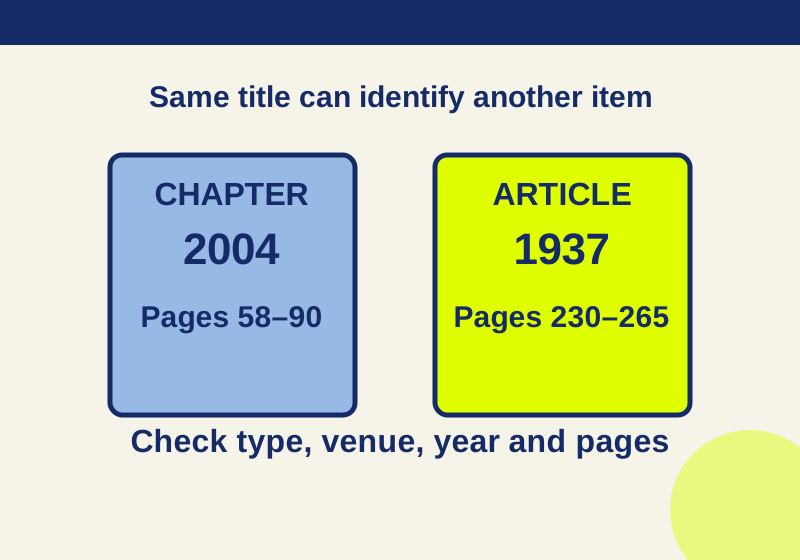
Search Crossref with the full citation, then compare the candidate’s publication type, venue, year and pages before copying its DOI. In a recorded Crossref search for A. M. Turing’s “On Computable Numbers, with an Application to the Entscheidungsproblem,” the first title-only result was a 2004 book chapter. Adding the journal name, volume, and pages brought the original journal article to the top.
What the two searches returned
The comparison used Crossref’s REST API on October 7, 2026, with five results requested for each query. These were API results, not a trial of Crossref’s Simple Text Query page. The recorded responses show why the extra citation details matter.
| Query | Rank | DOI and recorded result |
|---|---|---|
Turing On Computable Numbers with an Application to the Entscheidungsproblem |
1 | 10.1093/oso/9780198250791.003.0005: a chapter in The Essential Turing, dated September 9, 2004, pages 58-90 |
| Same title-only query | 2 | 10.1016/b978-0-08-009217-1.50024-4: a 1960 book chapter, pages 230-264 |
Turing A M On Computable Numbers with an Application to the Entscheidungsproblem Proceedings of the London Mathematical Society 42 230 265 |
1 | 10.1112/plms/s2-42.1.230: the original journal article, volume s2-42, issue 1, pages 230-265, published in 1937 |
| Same full-citation query | 2 | 10.1112/plms/s2-43.6.544: a separate correction, volume s2-43, pages 544-546, published in 1938 |
All five results returned for the title-only query were book chapters; the original journal article was not among them. That is a result of these particular queries at the time checked, not a rule about how Crossref will rank every citation.
The table also shows why a matching title is insufficient. The first title-only candidate has different pages and is a book chapter. The second is a book chapter with a different page range. Neither DOI should be substituted for the original journal article’s DOI when the reference is to that article.
Search with the citation you have
- Put the reference on one line. Include the author, title, publication name, volume, and pages when your source provides them. For the example above, the full-citation query is the exact text used in the recorded API comparison.
- Search and inspect the candidates. Crossref’s Simple Text Query accepts references one per line, with a blank line between references. Its List All Possible DOIs option can show additional candidates. Those page instructions come from Crossref’s documentation; the recorded comparison did not test the page.
- Match the item, not just the words in its title. Check whether the candidate is a journal article or a chapter, then compare the journal or book, year, volume, issue, and page range with your reference. A DOI’s valid-looking form does not establish that it belongs to the item you used.
- Keep the correction separate. In this example, the 1938 correction has its own DOI and pages. The Crossref record for the original article identifies the 1937 article on pages 230-265; use the correction’s DOI only when the correction is the item you mean to cite.
If you work with the Crossref REST API, the recorded searches used a GET request to /works, with the citation text in query.bibliographic and rows=5. A title-only request and a request containing the fuller reference can return materially different first candidates. Treat the returned order as a way to find candidates, then make the bibliographic comparison yourself.
Which year belongs in the reference?
The publisher’s page for the original article lists pages 230-265 and publication in 1937. The saved Crossref record separately contains a 1937 print date and an online date of December 23, 2016. Those fields describe different publication events.
The first title-only candidate is another source of confusion: its title ends with “(1936),” but its own publication date is September 9, 2004. A year appearing inside a chapter title is not automatically the date of that chapter’s edition. Read the publication field alongside the book title and pages.
The 1960 book chapter in the title-only results is another distinct item. If that chapter is what you actually consulted, identify that item in your reference rather than attaching the original journal article’s DOI to it.
Read the record behind the result
Open the candidate’s metadata record and find the fields that correspond to the reference in front of you. For the original Turing article, the response contains these values:
{
  "DOI": "10.1112/plms/s2-42.1.230",
  "type": "journal-article",
  "container-title": ["Proceedings of the London Mathematical Society"],
  "volume": "s2-42",
  "issue": "1",
  "page": "230-265",
  "published-print": {"date-parts": [[1937]]},
  "published-online": {"date-parts": [[2016, 12, 23]]}
}
The print date has year precision. A reference using that field should not acquire an invented January 1 publication date. The online field has a day as well as a month and year because it records a different event. Keep those values separate when moving metadata into a citation manager.
The response’s work type is also useful when the title is reused. A book-chapter candidate points to a particular book record, while this journal-article record points to the journal item. Compare the container and pages before choosing which item belongs in your bibliography. You can open the actual full-citation request to see a current response, or use the recorded JSON above to inspect the October 7 result without depending on today’s ranking.
If nothing fits
Try the fuller reference and inspect the possible DOIs before deciding there is no match. A missing result can mean the reference lacks enough distinguishing information or that Crossref does not have the record you seek; it does not establish that the work was never published. If the candidates still disagree with your reference on venue, type, year, or pages, leave the DOI unresolved until you can identify the cited item.
Source scope: The candidate rankings above come from the October 7, 2026 Crossref REST response record, which contains limited bibliographic metadata and no abstract. The Simple Text Query steps describe Crossref’s documentation; its page was not independently tested for this article.
KEEP GOING
More to explore.
SOURCE-CHECKEDWeb research
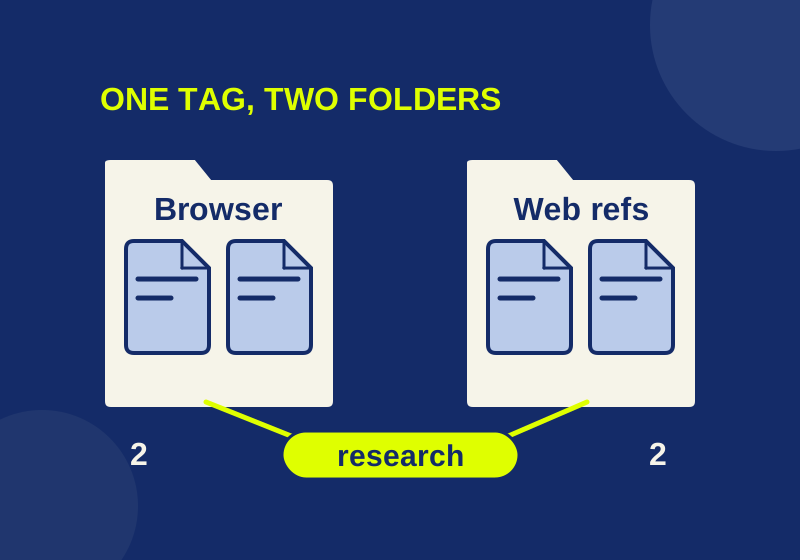
Firefox bookmark tags: find saved pages across folders
Find saved Firefox pages across folders with shared tags and a tested six-link practice file.
SOURCE-CHECKEDWeb research
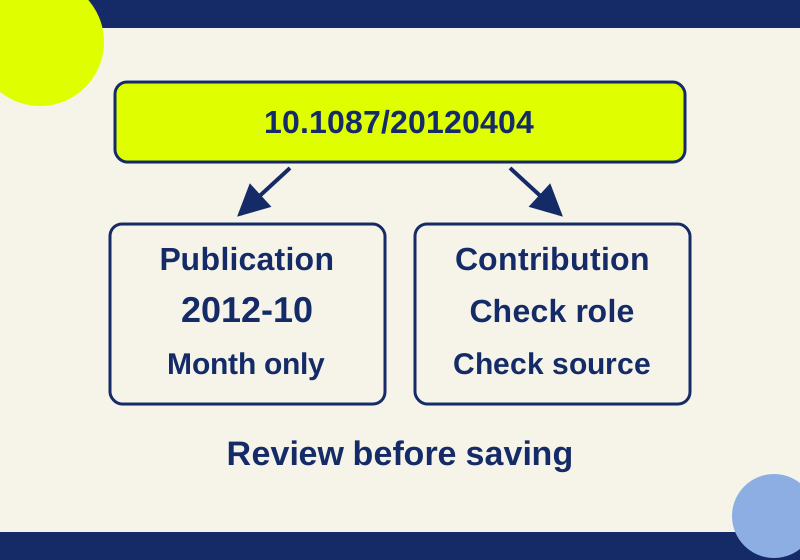
Add a publication to ORCID by DOI: check attribution and source
A DOI retrieves publication metadata. Your contribution, the record’s source and its visibility still need separate checks.